
Nagaland and Meghalaya BJP chief Temjen Imna Along and Ernest Mawrie, respectively also named party candidates approved by the party's central election committee.

The inflation data for May and the US Fed interest rate decision are the crucial factors that would dictate terms in the equity market this week, analysts said. Moreover, foreign fund trading activity, movement of rupee and crude oil prices would be the other key monitarables for the markets, they added. "All eyes will be on the US FOMC (Federal Open Market Committee) decision scheduled on June 15, and the market is fearing aggressive rate hikes amid inflation monster. "Bank of Japan will also announce its credit policy on June 17.

Former New Jersey Governor Chris Christie and a Republican presidential aspirant have called his fellow rival Indian-American Vivek Ramaswamy a guy who sounds like ChatGPT and described him as an "amateur" Barack Obama.

The breadth, indicating the overall health of the market, turned negative from positive

India is still the best story in major emerging markets from a 5-year perspective.

The rupee has declined by 24 paise in four days of losses.

The broader NSE Nifty, after slipping below the 10,500-mark to hit a low of 10,477, finally concluded 29 points, or 0.27 per cent, down at 10,524.

'We are not entirely out of the woods.' 'The broader trajectory remains tentative.' 'However, we may expect some near-term bounce.'

Foreign portfolio investors (FPIs) infused Rs 11,630 crore in the Indian equity markets in April on the reasonable valuation of stocks and appreciation in the rupee. This came after FPIs infused a net sum of Rs 7,936 crore in equities in March, mainly driven by bulk investment in the Adani Group companies by the US-based GQG Partners. However, if one adjusts for the investments of GQG in Adani Group, the net flow was negative.

The partially convertible rupee closed at 61.45/46 per dollar, weaker from Wednesday's 61.35/36.

RBI Governor Shaktikanta Das on Wednesday defended the Reserve Bank's handling of the price situation, saying acting prematurely on inflation would have exerted a heavy cost on the economy and citizens. Acknowledging that the inflation target has been missed, Das said the RBI decided to support the economy by not introducing a rate hike in face of a spike in inflation. "We prevented a 'complete collapse of the economy' by keeping rates lower and stayed away from premature tightening," Das said speaking at the annual FIBAC conference of bankers in Mumbai.

The sudden movement of the rupee - post the monetary policy - is not a reason to panic, said currency dealers. According to them, a correction was overdue for the rupee that remained the best performing currency in the region for well over a month. The rupee closed at 74.72 a dollar on Friday from its previous close of 74.60. It had dropped 1.52 per cent against the dollar on April 7 after the Reserve Bank of India (RBI) announced its monetary policy, committing to buy Rs 1 trillion of bonds in the June quarter. A weak rupee goes well with the export narrative of the government, and is consistent with the RBI's intervention strategy that prevented an appreciation.

For one thing, US Fed Chairman Ben Bernanke was perhaps right in postponing the quantitative easing taper even though the markets had complained at that time that they were primed for some reduction in QE3 and the Fed had missed an opportunity to execute their plans without causing too much of a flutter.

'Gold prices thrive on volatility and more so when the stock markets trend downward.'

Equity benchmarks Sensex and Nifty declined nearly 1 per cent on Friday, in tandem with a weak trend in overseas markets amid hawkish tone of global central banks. The 30-share BSE Sensex fell 461.22 points or 0.75 per cent to settle at 61,337.81. During the day, it tumbled 506.5 points or 0.81 per cent to 61,292.53.

'If the third wave of Covid infections is as bad as the second one, the market may get very polarised with a preference for blue-chips with low volatility.'

Pharma shares extended losses after the government's ban on combination drugs.

RBI unsure whether to cut rates or not in its next monetary policy.

Gold closed at its highest level in nearly two weeks.

New Reserve Bank of India chief makes his first monetary policy statement on Friday with expectations he may scale back some of the emergency measures that have helped the rupee bounce from a record low.

The US Federal Reserve has raised its benchmark interest rate by 0.25 per cent, only the second increase in a decade.

'The FY2023 inflation outcome is likely to exceed the RBI's current forecast by a wide margin.'
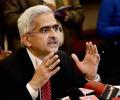
Reserve Bank Governor Shaktikanta Das on Monday said despite the latest headwinds arising from the Jackson Hole summit leading to extreme volatility, our banking system and financial markets are strong enough to withstand such pressures. Taking the markets by surprise, US Fed chair Jerome Powell had told the annual Jackson Hole summit of central bankers and economists last week that he would have to keep raising federal fund rates to tame inflation, which remains the biggest challenge to the world's largest economy. He also warned of the pains that such monetary policy actions would create on growth and jobs.
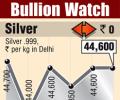
However, FII outflows of Rs 545 crore (Rs 5.45 billion) capped the gains in the rupee, which had slumped by 126 paise in past two days.
Better supply management and check on hoarding should be able to prevent food price spikes

Macroeconomic data announcements, the Covid situation in China and global market cues would guide Dalal Street in the first week of trading in the New Year, analysts said. Markets would also keep a track on rupee movement, Brent crude oil prices and foreign fund investment trends. "As market players attempt to understand the Fed's stance, Indian markets may respond in lockstep with their international counterparts when the Federal Open Market Committee (FOMC) minutes are made public later this week.

What drives Pakistani men to join its military, despite the toll it takes on them?

It's the first time in my memory that I have seen a negative expected return for equities, notes Akash Prakash. Hopefully, this implies the consensus is being too negative, and markets, as usual, will surprise everyone and deliver the least likely outcome.

Equity and oil markets can breathe easy for now, as the developments in Russia are unlikely to trigger a runaway rally in crude oil prices, said analysts. India, which imports nearly 80 per cent of its crude oil requirement, has been dependent on cheap Russian oil over the past few months to keep inflation - a sore point for the equity markets - in check. For the Indian markets that are expected to remain volatile amid these developments, analysts believe, the progress of monsoon, fund flows - both foreign institutional investor (FII) and domestic - and the upcoming corporate earnings season back home remain key.

IT major Accenture's second straight cut in its revenue growth forecast for FY23 suggests there is more pain ahead for the Indian IT sector, say analysts. Accenture has lowered the top end of its FY23 growth guidance in constant currency (CC) to 9 per cent from 10 per cent earlier. The firm, which follows a September-August fiscal cycle, expects a 2-6 per cent CC growth in Q4 of FY23 (June-August 2023) versus the 6-10 per cent prior guidance.

'Such big falls are quite frequent these days, so do not try to time this market.' 'Use big dips to accumulate quality stocks.'

The most important positive of India's stealth bull market is earnings growth across different sectors, explains Debashis Basu.

'We have a plan to plough back a 'This year in the first half we had profits of more than Rs 31,000 crore.' significant amount of profits this financial year.' 'We have seen this organic plough back of profit is one of best ways to support the equity of the bank.'

The rupee rose by 4 paise at 66.88 against the US dollar in early trade on Wednesday.

Among the Sensex pack, Yes Bank, L&T, HDFC, RIL, HDFC Bank, PowerGrid and Coal India were the biggest losers -- falling up to 2.43 per cent.

Domestic equity investors' wealth eroded by more than Rs 4.43 lakh crore on Monday as fears of a financial contagion triggered by one of the biggest bank failures in the US roiled market sentiments. After a strong opening, Indian stocks went into a tailspin with the benchmark 30-share BSE Sensex tumbling nearly 900 points to close at 58,237.85 points -- sliding for the third straight trading session. The NSE Nifty too declined 258.60 points to end at 17,154.30 points.

'The Indian economy and the Indian financial sector today remain resilient and much better placed.'

A decision on the interest rate for close to 60 million active subscribers of the Employee Provident Fund Organisation (EPFO) is likely to be taken in the next Central Board of Trustee (CBT) meeting, starting on March 25. A letter from the social security organisation regarding the convening of the 233rd CBT meeting was sent to all the board members last week, soliciting their presence in the meeting. Although the venue and the agenda haven't been drawn out yet, sources familiar with the matter say that the interest rate is unlikely to go below 8 per cent level amid a rising interest rate scenario across the globe.

India's economy is in much better shape to weather tighter U.S. monetary policy.

Investors booked profit ahead of the outcome of the two-day US Fed policy meet which begins today.
 © 2026 Rediff.com - Advertise with us - Disclaimer - Privacy Policy - Sitemap - Feedback - About us - Terms of use - Grievances